Business
Not All Pumps in a Fish Farm Do the Same Job: Here’s Why That Matters

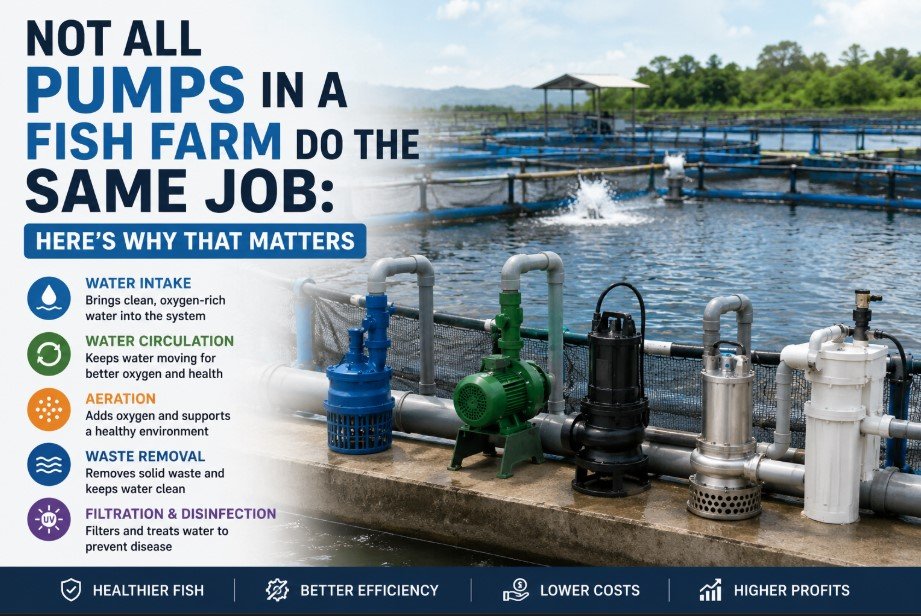
Walk past a fish farm, and it looks straightforward enough: tanks, pipes, fish. The engineering underneath it is considerably more complicated. And one of the details that catches operators out more often than it should is the assumption that a pump is a pump; that the same piece of equipment can handle every water task on site.
It can’t. In a modern recirculating aquaculture system (RAS), water is doing several very different jobs at once, and each one comes with its own pressure and flow requirements.
The Two Very Different Jobs Water Does in a Fish Farm
The most obvious task is circulation: moving large volumes of water continuously around the facility to maintain oxygen levels, carry away waste, and keep tank conditions stable. This is high-flow, low-pressure work, the kind that runs all day, every day, and demands equipment built for sustained efficiency at volume.
The second category is less visible but equally important. Rinsing drum filters, backwashing biofilter media, cleaning pipework, and managing water in hatchery systems all call for something quite different. Here, the requirement is forceful, targeted delivery rather than bulk movement. For these tasks, operators need a high pressure low volume water pump capable of generating enough pressure to dislodge accumulated solids, clear blocked media, and maintain the hygiene standards that fish health directly depends on.
These are not interchangeable specifications. Treating them as if they were is where problems start.
Why Using the Wrong Pump Costs More Than You’d Expect
The Knock-On Effects Add Up Quickly
A pump running outside its designed operating range doesn’t just perform poorly on that specific task. It typically draws more electricity than it should, puts unnecessary mechanical stress on seals and bearings, and needs more frequent servicing. In a facility running 24 hours a day across hundreds of days a year, those inefficiencies are not trivial.
Seafish, the UK’s public body for the seafood industry, notes that responsible aquaculture increasingly requires operations to manage not just productivity but also their environmental footprint — and energy consumption is a significant part of that calculation.
Choosing equipment that’s matched to each specific water task, rather than defaulting to a one-size approach, is one of the more straightforward ways to improve both operational efficiency and sustainability metrics. DESMI’s aquaculture range covers the full spectrum of pumping needs found in commercial fish farming: from high-volume main circulation to the more pressurised applications involved in filter management and maintenance.
What This Looks Like in Practice
A drum filter running on an underpowered rinse pump gradually loses cleaning effectiveness, slowly enough that the decline isn’t always obvious until water quality starts to slip. Biofilter media that isn’t properly backwashed builds up, reducing biological activity and adding stress to fish stock.
The practical advice from aquaculture engineers is consistent: treat each water task as its own specification problem. Circulation, filtration maintenance, hatchery delivery, and site cleaning all sit at different points on the pressure-to-flow curve. Matching equipment to purpose from the outset is considerably cheaper than retrofitting the right solution once things start going wrong.


Designing the Modern Hybrid Workplace: Architecture, Technology, and Inclusivity

Not All Pumps in a Fish Farm Do the Same Job: Here’s Why That Matters

Shaping a bathroom that reflects your habits, identity, and daily rhythm

Ja Morant’s House: Cost, Size, and Unique Details

Milyom and the Reality of Small Unregistered Dairy Brands

Ann Summers Allure and Authenticity

HSBC Business: Account Creation and Login Guide

Rumors about the Death of Curious George

Alleged Sale of Toshakhana Gifts by Imran Khan through Military Secretary